
Pocket money, chores and saving goals for teens, with a parent's view.
The teen sets up a goal, the parent does not fund it, and both stop opening the app.
Retention: feedback in exchange for access
Access in exchange for answers: the trial or the product keeps going as long as the answers do.
Gives: The family plan free for a month per accepted loop
Asks: Five questions, two from the teen and three from the parent
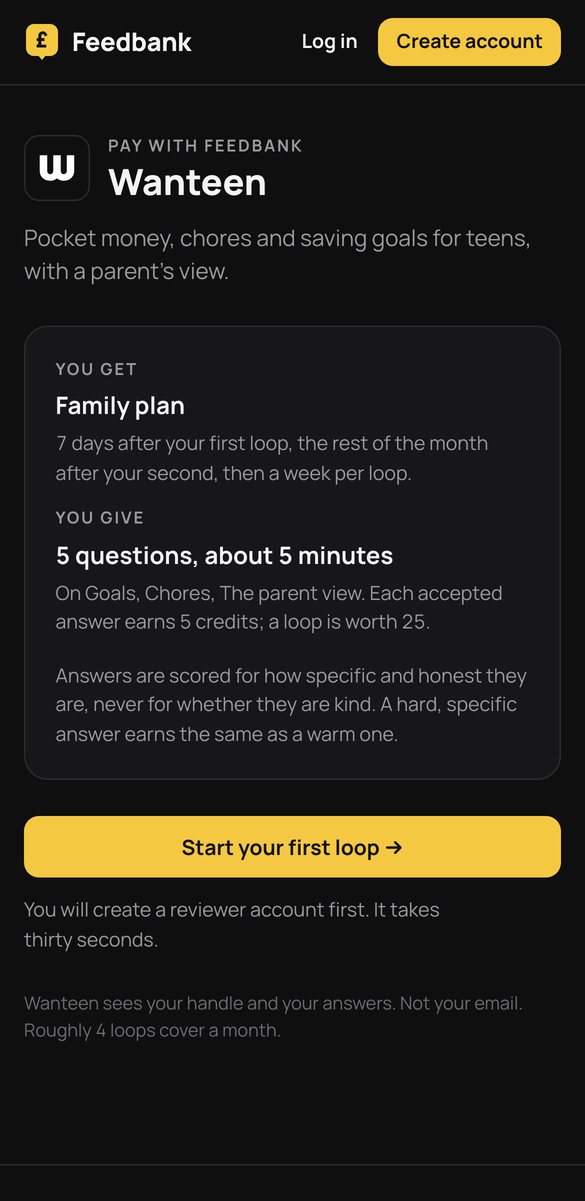
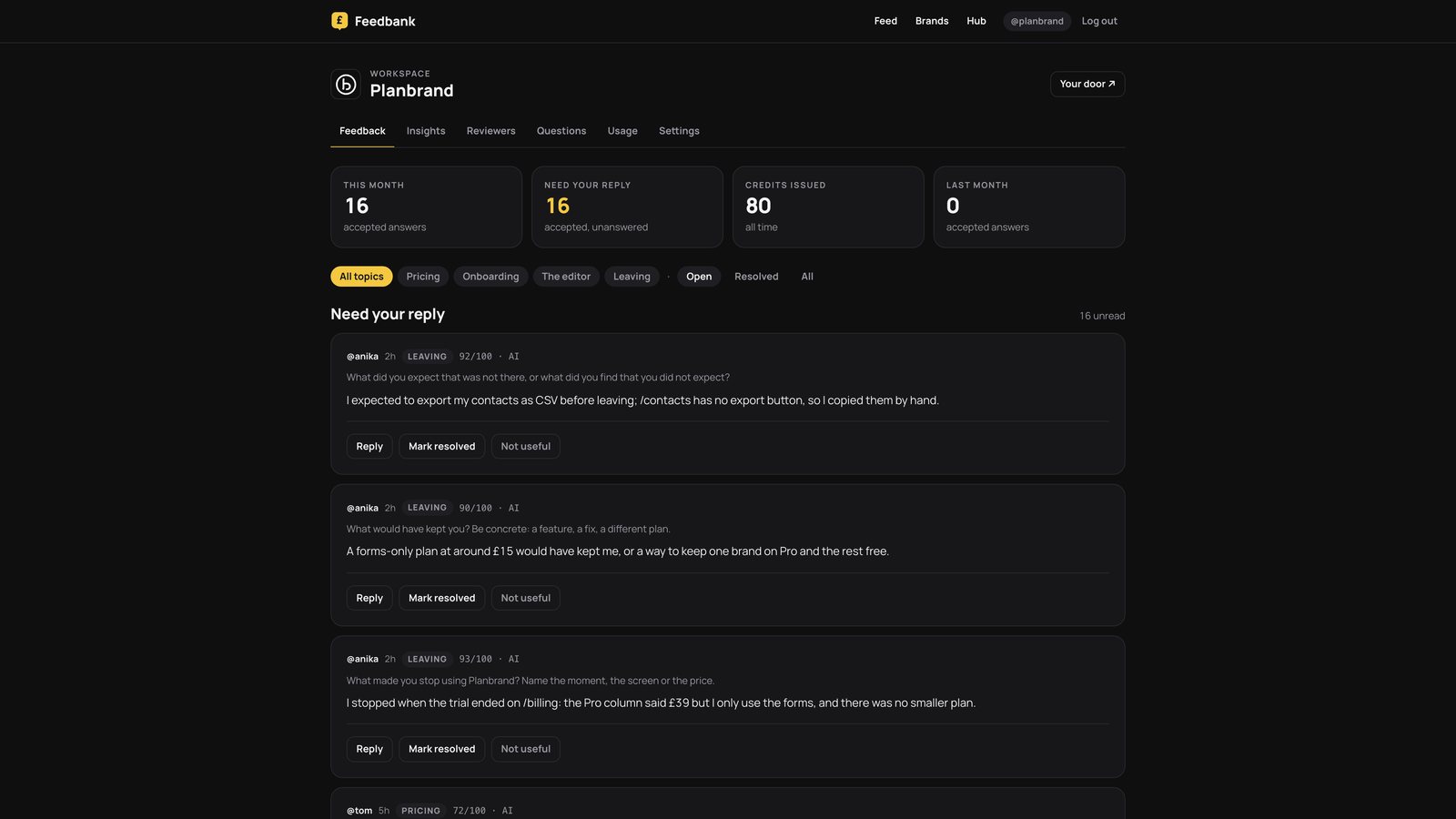
Planbrand's workspace, with answers in it. Wanteen's hub has the same screens, filed under Goals, Chores, The parent view and Leaving.
The weekly loop
Five questions on goals, chores, the parent view. Every answer is scored for how specific it is; a complaint earns what a compliment earns.
- 1What goal did you set, and what happened to it?
- 2Which chore did you do that was not counted?
- 3What did the parent view show you that you did not want to see, or wanted and did not?
- 4What did you argue about that the app could have settled?
- 5What would make the goal get funded?
What Wanteen learns
- Why goals go unfunded
- What chores go uncounted
- What the parent view should settle
Anyone who stops gets three exit questions: what made you stop, what would have kept you, what did you expect. Scored like any answer, credited, and read first by the Insights model.
This page describes Wanteen's setup on Feedbank. Figures appear only where the brand has published them.