
How Cyberava uses Feedbank
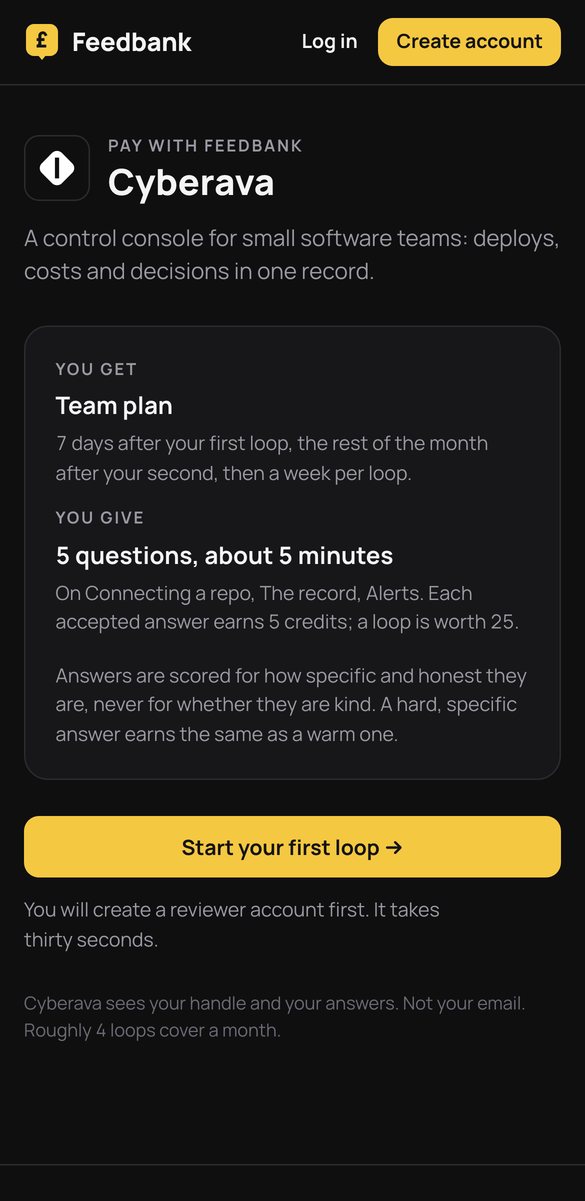
A control console for small software teams: deploys, costs and decisions in one record.
A team connects one repo, looks around, and stops before the second.
Insight: structured answers to act on
The hub files every answer by topic and screen, and the model names the core reasons behind them.
Gives: Team plan for a month per accepted loop
Asks: Five questions on connecting and the first week
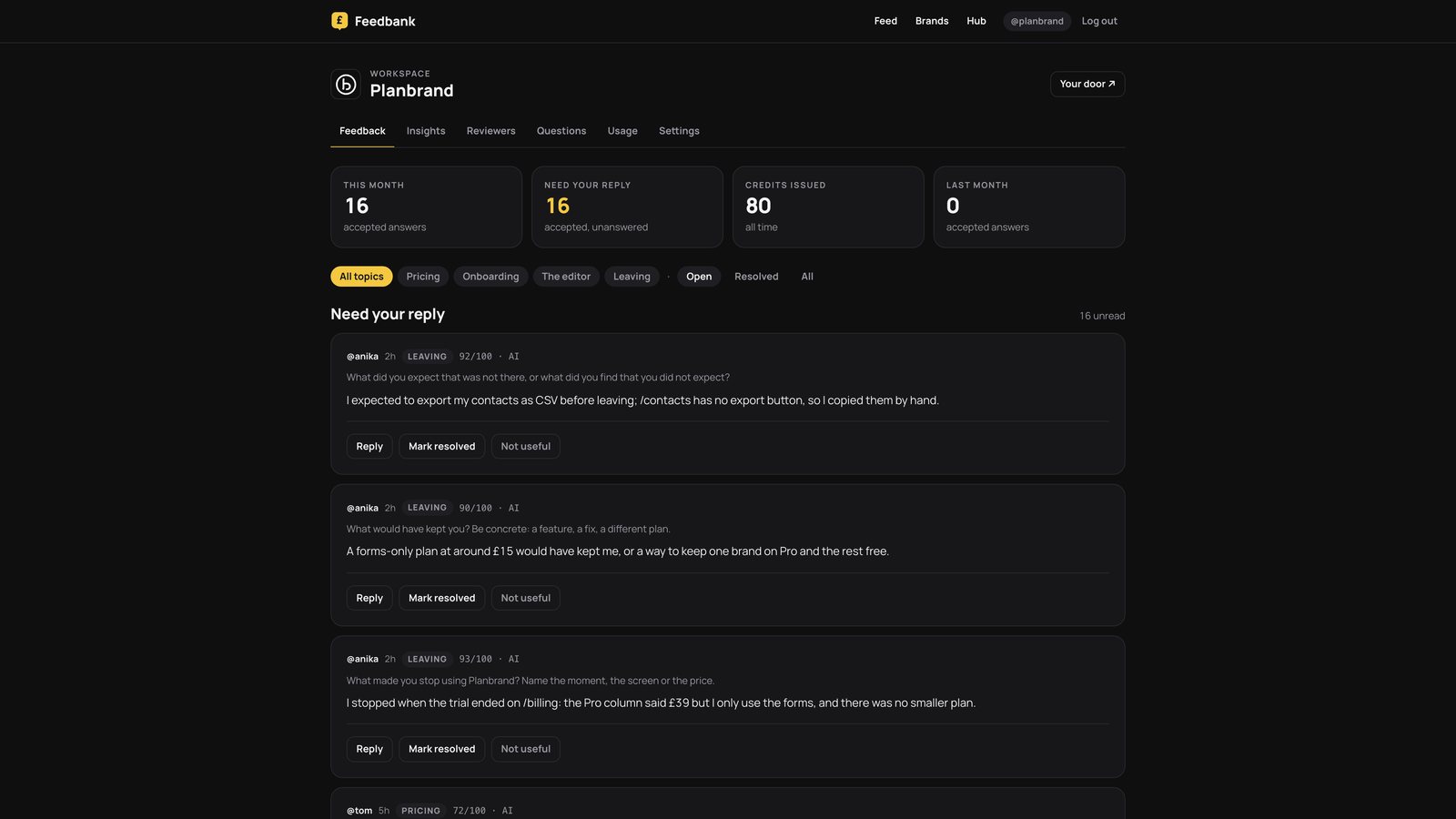
Planbrand's workspace, with answers in it. Cyberava's hub has the same screens, filed under Connecting a repo, The record, Alerts and Leaving.
The weekly loop
Five questions on connecting a repo, the record, alerts. Every answer is scored for how specific it is; a complaint earns what a compliment earns.
- 1What did you expect to see right after connecting your first repo?
- 2Which screen did you open most in week one, and what for?
- 3What alert did you get that you did not want, or want and not get?
- 4What would you need to see before connecting a second repo?
- 5What did the console tell you that you did not already know?
What Cyberava learns
- What the first-week screen should show
- Which alerts are noise
- Why the second repo never gets connected
Anyone who stops gets three exit questions: what made you stop, what would have kept you, what did you expect. Scored like any answer, credited, and read first by the Insights model.
This page describes Cyberava's setup on Feedbank. Figures appear only where the brand has published them.