
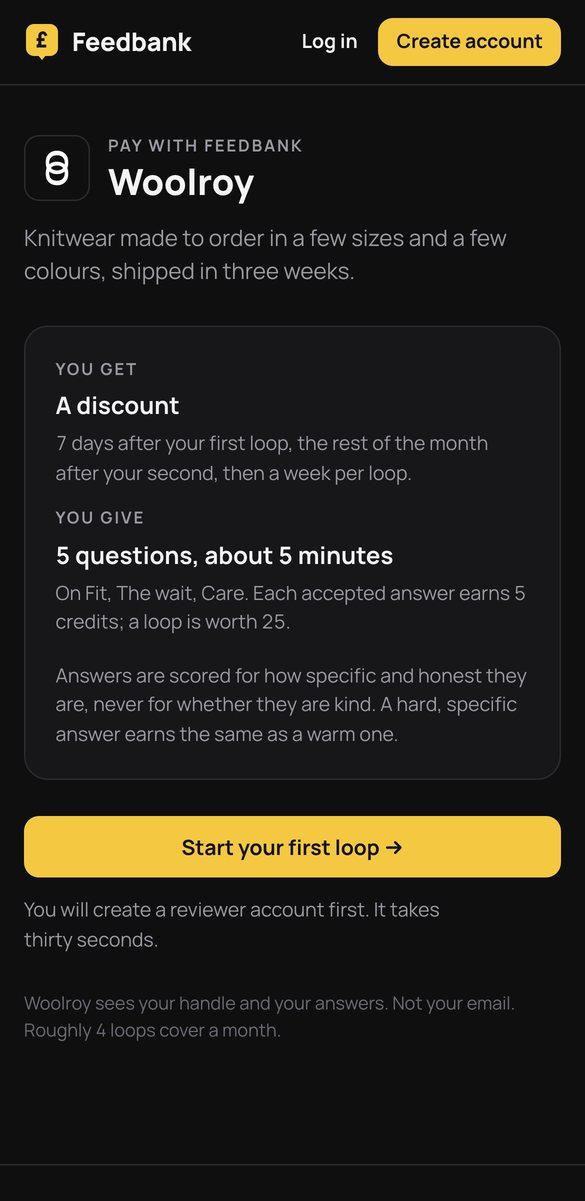
Knitwear made to order in a few sizes and a few colours, shipped in three weeks.
A first order is kept; the second is never placed.
Retention: feedback in exchange for access
Access in exchange for answers: the trial or the product keeps going as long as the answers do.
Gives: A discount per accepted loop, and a free scarf at four
Asks: Five questions after the piece arrives
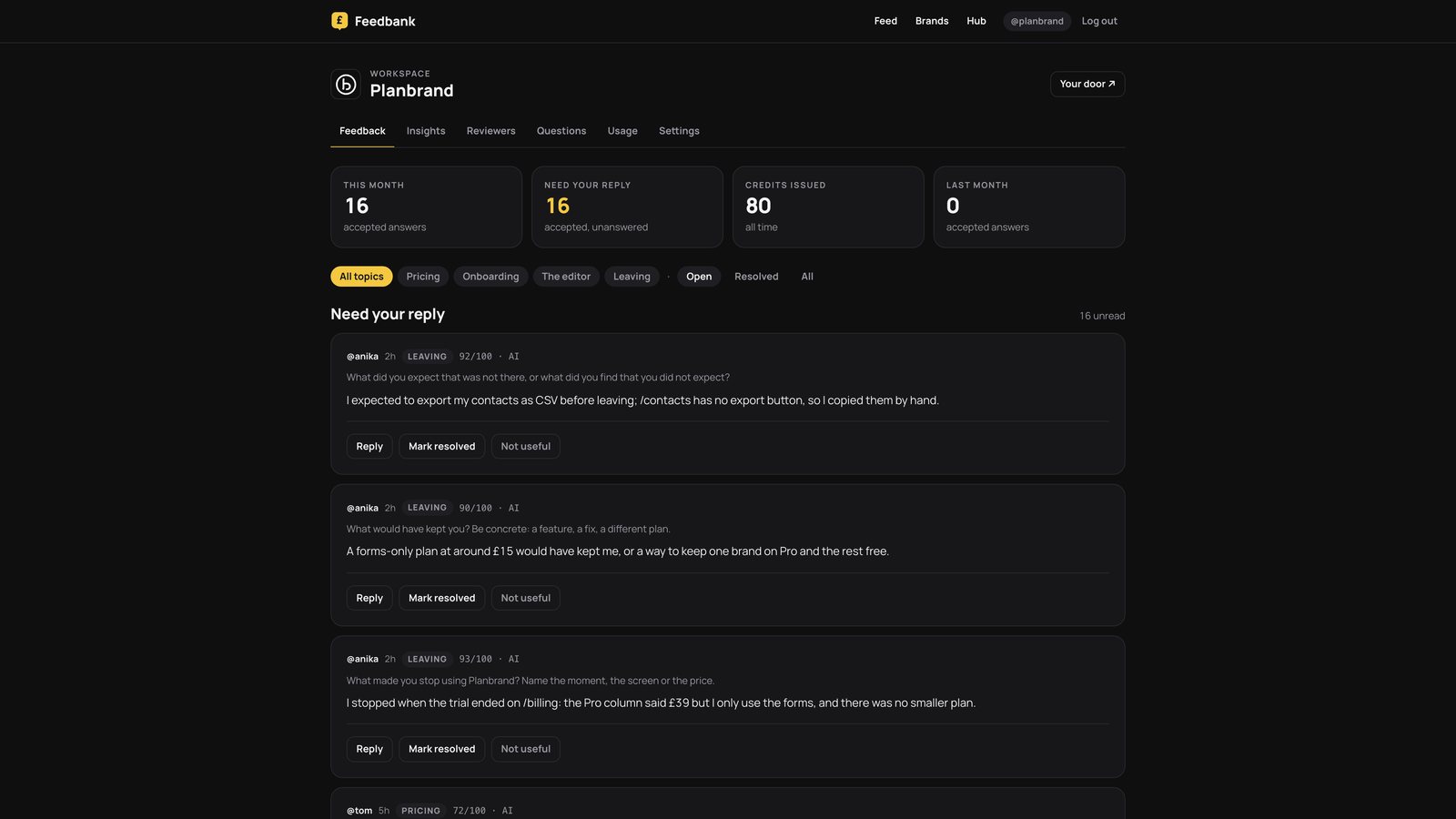
Planbrand's workspace, with answers in it. Woolroy's hub has the same screens, filed under Fit, The wait, Care and Leaving.
The weekly loop
Five questions on fit, the wait, care. Every answer is scored for how specific it is; a complaint earns what a compliment earns.
- 1How does the fit compare with what you expected from the size guide?
- 2What did you think during the three weeks, and what would have helped?
- 3How did you wash it, and what happened?
- 4What colour or size do you wish we made?
- 5What would make you order a second piece?
What Woolroy learns
- Where the size guide is wrong
- What the wait needs
- Which colours and sizes are missing
Anyone who stops gets three exit questions: what made you stop, what would have kept you, what did you expect. Scored like any answer, credited, and read first by the Insights model.
This page describes Woolroy's setup on Feedbank. Figures appear only where the brand has published them.